

Marsh, Swamp or Bog? A Simple Explainer for UK Wetlands
Marsh, swamp and bog get used interchangeably, but they describe very different places. Here's how to tell them apart — and where to see each one in Britain.
The words get swapped about constantly. A wet field behind a housing estate becomes "the bog"; a reedbed beside a river becomes "the swamp"; and a genuine raised bog — a thing that took thousands of years to build, one rain-fed layer at a time — gets waved away as a soggy field. The muddle matters, because these places differ in almost everything that counts: how they form, what grows on them, what lives in them, and how easily they are damaged.
Here is a working guide. Three terms, three sets of conditions, and a handful of British places worth a trip.
The short answer
- Marsh: wet ground over mineral soil, dominated by grasses, rushes, reeds and sedges. Water is usually nutrient-rich and often moving.
- Swamp: wet ground with trees on it. In Britain we mostly call this carr — wet woodland of alder, willow and birch.
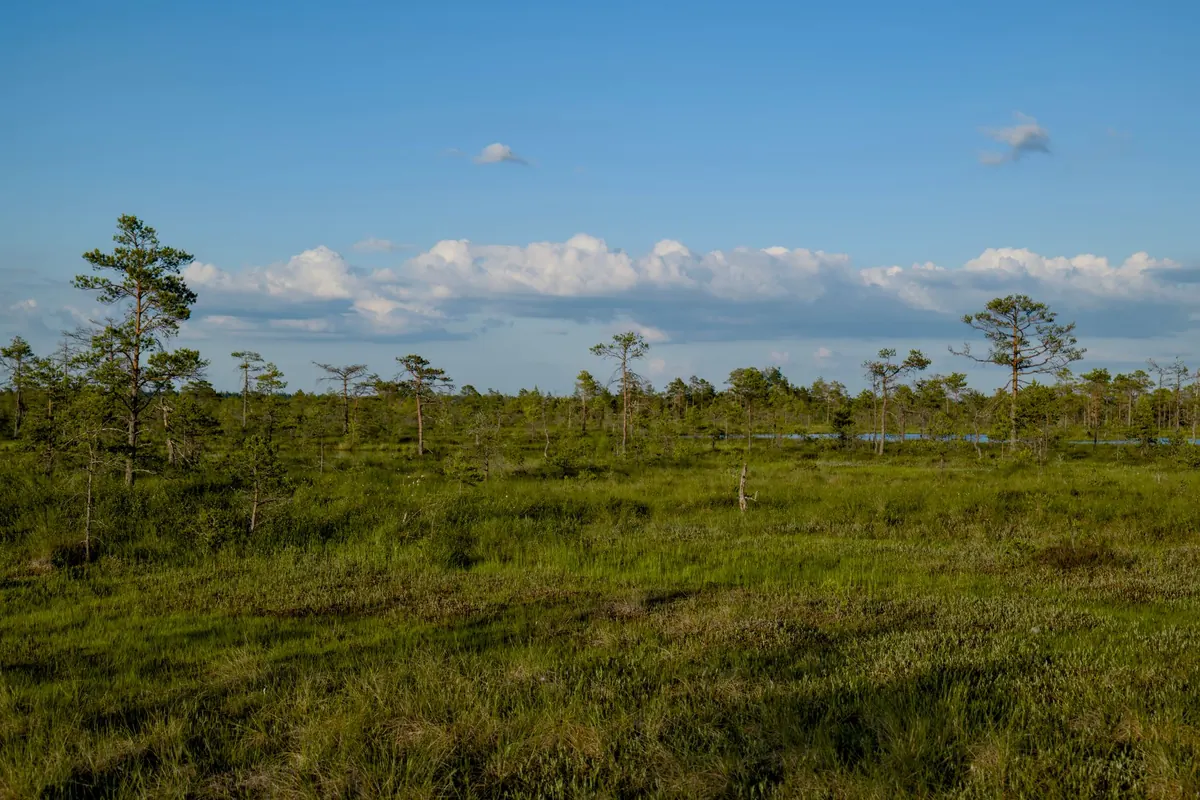
- Bog: rain-fed, acidic, nutrient-poor and peat-forming. Sphagnum mosses, heathers and cottongrass, not reeds.
That is the core of it. Everything else is detail — but the detail is where the interest lies.
Marshes: water sitting on soil
A marsh is what most people picture when they think of a wetland, and for once the picture is roughly right. The ground is waterlogged for much or all of the year, but the soil beneath is mineral — silt, clay, sand — rather than a deep layer of peat. Water arrives from a river, a ditch, a spring or the tide, and it usually brings nutrients with it.
Freshwater marshes give you reed sweet-grass, rushes, purple loosestrife and, in the richer examples, towering reedbeds. Wildlife follows the plants: bitterns and marsh harriers in the reeds, water voles along the dykes, dragonflies over open water in July.
Saltmarsh is the coastal version. It is covered by the tide and drained again twice a day, which only a limited set of plants can tolerate. Look for sea lavender, sea aster, glasswort and samphire, with creeks threading between the tussocks. The estuaries of Essex, the Wash and Morecambe Bay hold some of the best.
Good places to see marsh: Cley Marshes in Norfolk, run by Norfolk Wildlife Trust, with reedbed, scrapes and brackish pools; RSPB Rainham Marshes on the Thames in Essex, a freshwater marsh on what was once a military firing range; and the Ouse Washes on the Cambridgeshire–Norfolk border, where winter flooding is the whole point.
Swamps: the wooded ones
Add trees to a marsh and you have a swamp — or, if you are writing a British site management plan, a carr. Wet woodland is common along slow rivers, around the edges of flooded peat workings, and in the damp hollows of old fenland. Alder and willow do most of the work, with birch and ash on the drier edges, and a tangle of sedge tussocks and moss underneath that makes walking a slow business.
Water sits at or just above the surface for much of the year, though many carrs dry out in late summer. Fallen leaves and dead sedge accumulate in the stagnant water and slowly turn into a soft, crumbly peat — so a carr can be peat-forming without being a bog. The difference is the water source: carr peat is fed by groundwater and flooding, which brings in minerals.
Otters use these woods as cover and travel routes. So do mosquitoes, which is the price of a visit in still, humid weather.
Good places to see carr: the wet woodland at Wicken Fen in Cambridgeshire, cared for by the National Trust since 1899; the willow carr of the Norfolk Broads, including the wooded edges at RSPB Strumpshaw Fen; and the Somerset Levels, where the old peat cuttings around RSPB Ham Wall and Shapwick Heath have grown back into a patchwork of reedbed and wet wood.
Bogs: the rain-fed ones
Bogs are the odd ones out, and the ones most often mislabelled. A bog receives its water only from rain and snow. It has no stream feeding it and no groundwater welling up beneath it. That isolation makes it acidic and desperately short of nutrients, and only a specialist set of plants can cope.
Sphagnum mosses are the key. They hold enormous quantities of water, acidify their surroundings as they grow, and — because the waterlogged, oxygen-poor conditions stop them rotting properly — build up as peat. The whole structure is essentially a living archive of dead moss. Growth is far too slow to see.
Britain has two main kinds. Raised bogs are domes of peat that sit higher than the land around them, forming on flat ground in the lowlands and on valley floors. Blanket bogs are thinner layers of peat draped over upland plateaus and slopes, where rainfall is high and drainage is poor.
Look for heather, hare's-tail cottongrass, cross-leaved heath, bog asphodel and the round-leaved sundew, which supplements its diet with insects because the soil offers so little. On the best lowland sites you may find the large heath butterfly.
Fen: the fourth word you will meet
Fens form peat too, which is why they get confused with bogs, but they are fed by mineral-rich groundwater and streams. That makes them neutral or alkaline and far more productive: reeds, saw sedge, marsh helleborine and a long list of scarce plants. Wicken Fen and Woodwalton Fen in Cambridgeshire are the classic English examples.
Where to see each type
- Marsh: Cley Marshes, Norfolk; RSPB Rainham Marshes, Essex; the Ouse Washes, Cambridgeshire and Norfolk; saltmarsh along the Essex estuaries and Morecambe Bay.
- Carr (swamp): Wicken Fen, Cambridgeshire; the Norfolk Broads; the Somerset Levels.
- Raised bog: Flanders Moss NNR near Stirling; Whixall Moss on the Shropshire–Wrexham border; Thorne Moors in the Humberhead Peatlands NNR, South Yorkshire; Cors Fochno in Ceredigion.
- Blanket bog: the Flow Country of Caithness and Sutherland, including RSPB Forsinard Flows; parts of Dartmoor and the Pennines.
- Fen: Wicken Fen and Woodwalton Fen, Cambridgeshire.
Visiting without wrecking the place
These habitats are slow to form and quick to damage, so a little care goes a long way.
- Stay on the boardwalk. Bog surfaces can look convincingly solid and then drop away underfoot, and the moss you are standing on may have taken decades to grow back.
- Take nothing. Not a handful of sphagnum, not a cottongrass seed head. On a bog, the moss is the habitat.
- Check tide times before walking a saltmarsh. Estuary creeks fill quickly, and mud is deeper than it looks.
- Wear wellies and long sleeves. Midges gather in still air on summer evenings, and ticks wait in long grass. Check yourself afterwards, remove any tick promptly, and if you feel unwell in the following days, speak to a pharmacist or your GP.
- Keep dogs on leads between March and July, when ground-nesting birds and young are about.
- Take binoculars rather than walking closer. Almost everything interesting on a wetland is best watched from a distance anyway.
Get the names right and the places start making sense. A marsh is a wet field with a job to do; a carr is a wood standing in water; a bog is a slow, rain-fed mechanism that has been running since the last ice retreated. All three are worth a morning of your time — and worth leaving exactly as you found them.
Photo: Lauri Poldre / Pexels